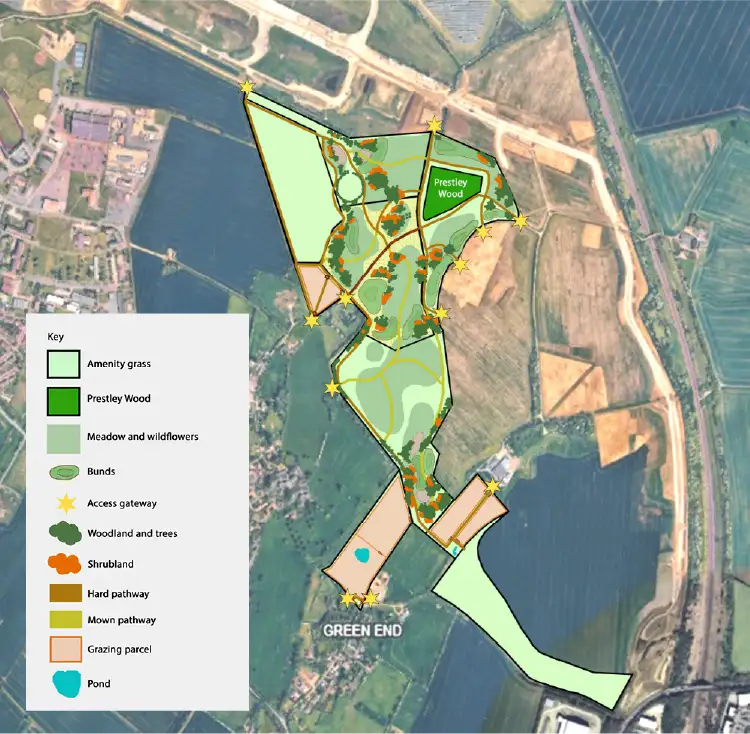
Prestley Country Park will stretch over 63 hectares (150 acres) and provide a multifunctional landscape combining biodiversity and heritage with health, recreation and education.
The vision and early plans for Prestley Country Park have been informed by feedback from Green Spaces consultations and Quality of Life surveys, as well as discussions with the Prestley Country Park Working Group and other stakeholders.
Our Vision
Shaped for the community, by the community, Prestley Country Park will provide:
- a refuge for wildlife and biodiversity.
- a place for families to make memories and communities to thrive.
- a resource for climate resilience and education.
- a celebration of heritage.
Prestley Country Park will be designed to national standards, and while it will be delivered in phases and take many years to achieve the full maturity of a Country Park, we have an aspiration to work towards Green Flag Award status in the long term.
Working with Nene Park Trust
Urban&Civic, Alconbury Weald’s master developer, is working in partnership with Nene Park Trust to help shape not only the physical design, but the culture, care and community that will be embodied in Prestley Country Park.
Nene Park Trust is a registered charity with over forty years of experience in creating, managing and bringing complex public landscapes to life. Project managed by Shelley Cant, the team will help bring the vision for Prestley County Park to life: embedding biodiversity net gain, restoring heritage landscapes, integrating sustainable land management and organising events and activities that inspire connection through learning, volunteering and celebration.
Design principles

Welcoming &
Well-Located
The park should feel open and inviting from the outset, with well-placed entrances, paths, picnic areas, and key community hubs.

Rooted in Community Need
Respond to local voices - designed with the community, for the community, shaped by lived experience and shared aspiration.

Health & Wellbeing
Support happier, healthier communities through active, restorative landscapes, encouraging connection with nature, reducing stress & boosting movement.

Cross-Generational
The park should support all generations - inviting shared moments through picnic spots, seating, outdoor gyms and space to move or rest.

Strong Sense of Place
Designs should reflect the site's unique identity using local materials, landscapes and stories to shape distinctive, meaningful spaces.

Local History
Deepen the connection to place, celebrating local history, archaeology, cultural identity and landscape character in tangible, joyful ways.

Inclusive & Accessible
Every visitor should feel included and empowered to play - designs must remove barriers and reflect diverse needs.

Embracing Challenge & Risk
Active zones should offer climbing, balance, height and speed - encouraging managed risk and growing confidence through adventure.

Nature Connection
Create a home for nature. Meadows and woodlands add connection with water and immerse visitors in the wild; placing nature at the centre of discovery.

Sustainable, Evolving & Resilient
Designs should be futureproofed, climate - aware, low-maintenance and adaptable to seasonal change and community use over time.

Rich in Play Opportunities
From sculptural landforms to loose parts and water, play should offer variety - stimulating physical, social and creative development for all.

Aligned with Policy & Strategy
Designs should respond to local and national policy priorities - supporting strategic aims whilst meeting statutory advice, guidance and requirements.